How the baroque trumpet makes its sound
In the Hornbostel–Sachs system, which classifies instruments by how they produce sound, the baroque trumpet belongs to the brass (lip-vibrated aerophones): the player's buzzing lips set the air column vibrating – trumpets, horns, trombones, tubas and the didgeridoo.
More broadly it is one of the aerophones (wind instruments), where sound comes from vibrating air.
Press play above and watch the spectrum: the evenly spaced peaks are harmonics, and their relative strength is what gives the instrument its character.
From Wikipedia
The baroque trumpet is a musical instrument in the brass family. It is designed to allow modern performers to imitate the natural trumpet when playing music of that time, so it is often associated with it. The term 'baroque trumpet' is often used to differentiate an instrument which has added vent holes and other modern compromises, from an original or replica natural trumpet which does not. Notable baroque trumpet players include Alison Balsom, Niklas Eklund, Brian Shaw, and Caleb Hudson.
Other brass

Trumpet
Brass (lip-vibrated aerophones)

Trombone
Brass (lip-vibrated aerophones)

Tuba
Brass (lip-vibrated aerophones)

French horn
Brass (lip-vibrated aerophones)

Brass instrument
Brass (lip-vibrated aerophones)

Vuvuzela
Brass (lip-vibrated aerophones)
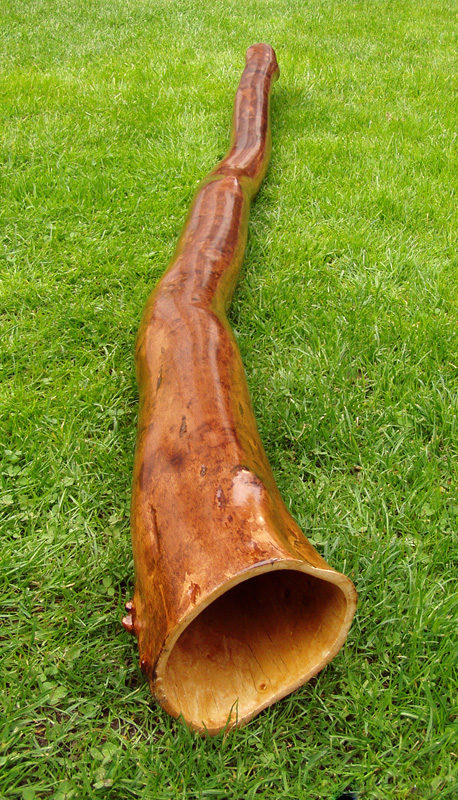
Didgeridoo
Brass (lip-vibrated aerophones)

Cornet
Brass (lip-vibrated aerophones)
Frequently asked questions
What does a baroque trumpet sound like?
As one of the brass, its sound comes from the way the player's buzzing lips set the air column vibrating.
What type of instrument is the baroque trumpet?
It is classified as brass (lip-vibrated aerophones) (Hornbostel–Sachs 423.121).
Sources & credits
- Wikidata Q808574 – CC0
- Wikipedia: Baroque trumpet – CC BY-SA 4.0
- Image by Francisco Pérez – Copyrighted free use