How the atabaque makes its sound
In the Hornbostel–Sachs system, which classifies instruments by how they produce sound, the atabaque belongs to the struck drums: a stretched membrane (drumhead) is struck with hands or beaters.
More broadly it is one of the membranophones (drums), where sound comes from a vibrating stretched membrane.
Press play above and watch the spectrum: the evenly spaced peaks are harmonics, and their relative strength is what gives the instrument its character.
From Wikipedia
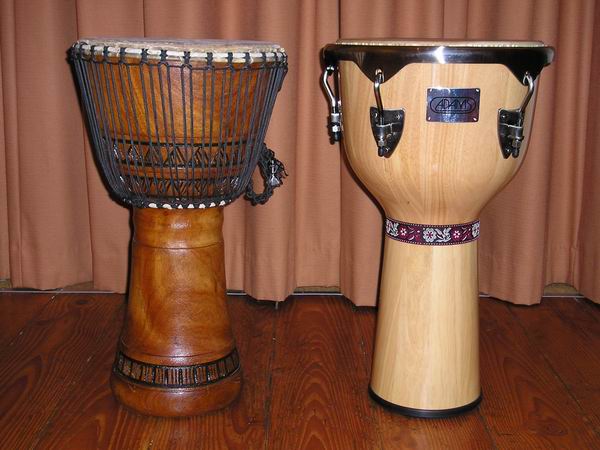
The atabaque is a tall, wooden, Afro-Brazilian hand drum, similar to conga.
The shell is made traditionally of Jacaranda wood from Brazil. The head is traditionally made from calfskin. A system of ropes are intertwined around the body, connecting a metal ring near the base to the head. Because of this tuning mechanism the drum is sometimes known as 'Atabaque de Corda'. Wooden wedges are jammed between this ring and the body and a hammer is used to tighten or loosen the ropes, raising or lowering the pitch of the drum.
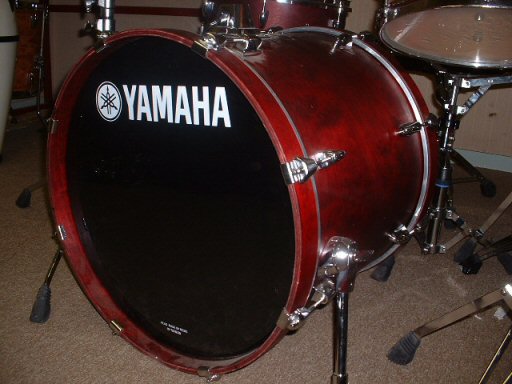
Other struck drums



Frequently asked questions
What does an atabaque sound like?
As one of the struck drums, its sound comes from the way a stretched membrane (drumhead) is struck with hands or beaters.
What type of instrument is the atabaque?
It is classified as struck drums (Hornbostel–Sachs 211.221.1).
Sources & credits
- Wikidata Q614158 – CC0
- Wikipedia: Atabaque – CC BY-SA 4.0
- Image by Xandu – Public domain