Listen to the drum
Tip: press play to see the sound's live frequency spectrum in blue over the waveform.
How the drum makes its sound
In the Hornbostel–Sachs system, which classifies instruments by how they produce sound, the drum belongs to the struck drums: a stretched membrane (drumhead) is struck with hands or beaters.
More broadly it is one of the membranophones (drums), where sound comes from a vibrating stretched membrane.
Players shape its sound through technique and materials; the resonating body filters the raw vibration, boosting some harmonics and damping others.
From Wikipedia
The drum is a member of the percussion group of musical instruments. In the Hornbostel–Sachs classification system, it is a membranophone. Drums consist of at least one membrane, called a drumhead or drum skin, that is stretched over a shell and struck, either directly with the player's hands, or with a percussion mallet, to produce sound. There is usually a resonant head on the underside of the drum. Other techniques have been used to cause drums to make sound, such as the thumb roll. Drums are the world's oldest and most ubiquitous musical instruments, and the basic design has remained virtually unchanged for thousands of years.
Other struck drums


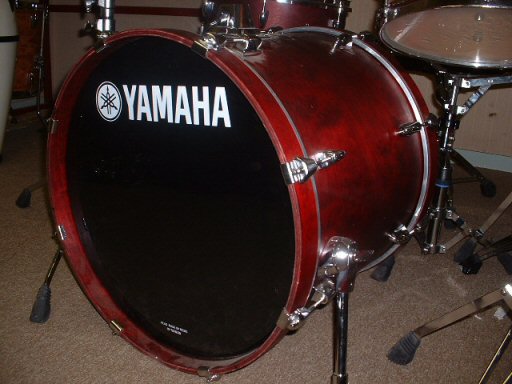

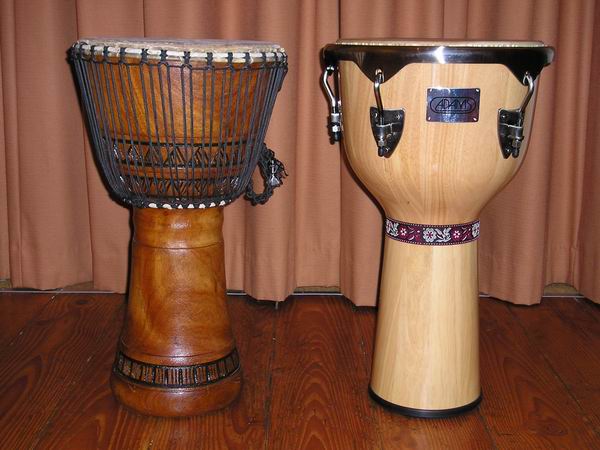

Questions people ask
Real questions from the Stack Exchange community – follow a link to read the discussion.
- Is there a "standard" or "typical" drum kit layout? · Music SE
- How to reliably execute a snare drum rimshot? · Music SE
- How to properly tune drum heads? · Music SE
- How to choose drum pitches? · Music SE
- Rhythm/Drum exercises without drums · Music SE
Frequently asked questions
What does a drum sound like?
Listen to 1 recording on this page. As one of the struck drums, its sound comes from the way a stretched membrane (drumhead) is struck with hands or beaters.
What type of instrument is the drum?
It is classified as struck drums (Hornbostel–Sachs 21).
Sources & credits
- Bass drum – CC BY-SA 3.0 · Wikimedia Commons
- Wikidata Q11404 – CC0
- Wikipedia: Drum – CC BY-SA 4.0
- Image by NPS – Public domain