How the akkordolia makes its sound
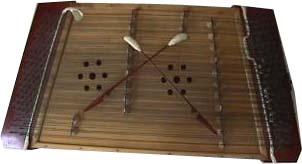
In the Hornbostel–Sachs system, which classifies instruments by how they produce sound, the akkordolia belongs to the board zithers: strings are stretched across a flat board or box – the family of the piano, harpsichord and hammered dulcimer.
More broadly it is one of the chordophones (string instruments), where sound comes from vibrating strings, amplified by a resonating body.
Its timbre – the colour that lets you tell it apart from other instruments playing the same note – comes from the mix of overtones its body and resonator emphasise.
From Wikipedia
The akkordolia is a zither from Germany and Austria, consisting of a long box, with the strings being pressed against the fretboard by pressing down buttons from above, similar to the Japanese taishogoto. One row of buttons changes the melody, and the other row of buttons can change the chord which backs the melody.
The instrument was invented around the start of the 20th century by Otto Teller of Klingenthal, Germany, and was produced locally there by cottage industry.
Other board zithers




Frequently asked questions
What does an akkordolia sound like?
As one of the board zithers, its sound comes from the way strings are stretched across a flat board or box.
What type of instrument is the akkordolia?
It is classified as board zithers (Hornbostel–Sachs 314.122-8).
Sources & credits
- Wikidata Q4701390 – CC0
- Wikipedia: Akkordolia – CC BY-SA 4.0
- Image by KaiUweBehrmann – CC BY-SA 4.0