How the bandura makes its sound
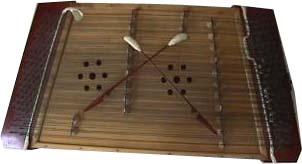
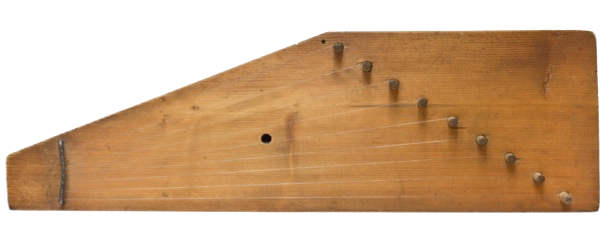
In the Hornbostel–Sachs system, which classifies instruments by how they produce sound, the bandura belongs to the board zithers: strings are stretched across a flat board or box – the family of the piano, harpsichord and hammered dulcimer.
More broadly it is one of the chordophones (string instruments), where sound comes from vibrating strings, amplified by a resonating body.
Its timbre – the colour that lets you tell it apart from other instruments playing the same note – comes from the mix of overtones its body and resonator emphasise.
From Wikipedia
A bandura is a Ukrainian plucked-string folk-instrument. It combines elements of the zither and lute and, up until the 1940s, was also often called a kobza. Early instruments (c. 1700) had 5 to 12 strings and resembled lutes. In the 20th century, the number of strings increased initially to 31 strings (1926), then to 56 strings – 68 strings on modern "concert" instruments (1954).
Musicians who play the bandura are referred to as bandurists. In the 19th and early 20th centuries traditional bandura players, often blind, were called kobzars. It is suggested that the instrument developed as a hybrid of gusli (Eastern-European psaltery) and kobza (Eastern-European lute). Some also consider the kobza as a type or an instrument resembling the bandura. The term bandura occurs in Polish chronicles from 1441. The hybridization, however, occurred in the late-18th or early-19th centuries.
Other board zithers




More instruments from Ukraine


Frequently asked questions
What does a bandura sound like?
As one of the board zithers, its sound comes from the way strings are stretched across a flat board or box.
What type of instrument is the bandura?
It is classified as board zithers (Hornbostel–Sachs 314.122).
Where does the bandura come from?
The bandura originates from Ukraine.
Sources & credits
- Wikidata Q262414 – CC0
- Wikipedia: Bandura – CC BY-SA 4.0
- Image by Julianhayda – CC BY-SA 3.0