Listen to the viola
Tip: press play to see the sound's live frequency spectrum in blue over the waveform.
How the viola makes its sound
In the Hornbostel–Sachs system, which classifies instruments by how they produce sound, the viola belongs to the lutes: strings run parallel to a soundboard and along a neck – the family of the guitar, violin, sitar and oud.
More broadly it is one of the chordophones (string instruments), where sound comes from vibrating strings, amplified by a resonating body.
Its timbre – the colour that lets you tell it apart from other instruments playing the same note – comes from the mix of overtones its body and resonator emphasise.
Range of the viola
The typical range of the viola runs from C3 (130.8 Hz) to E6 (1,319 Hz) – about 3.3 octaves. Harmonics extend its sound far higher.
From Wikipedia
The viola is a string instrument of the violin family, and is usually bowed when played. The viola is slightly larger than the violin and has a lower sound. Since the 18th century, it has been the middle or alto voice of the violin family, between the violin (which is tuned a perfect fifth higher) and the cello (which is tuned an octave lower). The strings from low to high are typically tuned to C3, G3, D4, and A4.
In the past, the viola varied in size and style, as did its names. The word viola originates from the Italian language. The Italians often used the term viola da braccio, meaning, literally, 'of the arm'. "Brazzo" was another Italian word for the viola, which the Germans adopted as Bratsche. The French had their own names: cinquiesme was a small viola, haute contre was a large viola, and taile was a tenor. Today, the French use the term alto, a reference to its range.
Other lutes


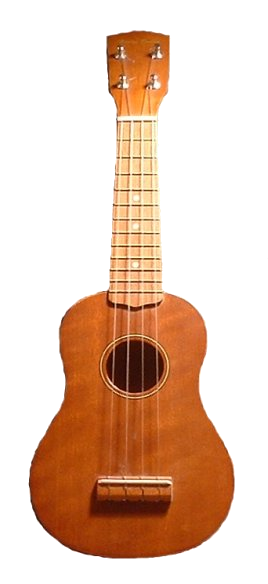
Questions people ask
Real questions from the Stack Exchange community – follow a link to read the discussion.
Frequently asked questions
What does a viola sound like?
Listen to 4 recordings on this page. As one of the lutes, its sound comes from the way strings run parallel to a soundboard and along a neck.
What type of instrument is the viola?
It is classified as lutes (Hornbostel–Sachs 321.322-71).
Sources & credits
- Viola – CC BY-SA 2.5 · Wikimedia Commons
- Vibrato-viola-mesurat – CC BY-SA 4.0 · Wikimedia Commons
- Viola F 03 by Mozart – CC0 1.0 · Wikimedia Commons
- Trio for Piano Violin and Viola (ISRC USUAN1100460) by Kevin MacLeod – CC BY 3.0 · Wikimedia Commons
- Wikidata Q80284 – CC0
- Wikipedia: Viola – CC BY-SA 4.0
- Image by Just plain Bill – Public domain