How the alto clarinet makes its sound
In the Hornbostel–Sachs system, which classifies instruments by how they produce sound, the alto clarinet belongs to the single-reed instruments: a single reed beats against a mouthpiece – clarinets and saxophones.
More broadly it is one of the aerophones (wind instruments), where sound comes from vibrating air.
Press play above and watch the spectrum: the evenly spaced peaks are harmonics, and their relative strength is what gives the instrument its character.
From Wikipedia
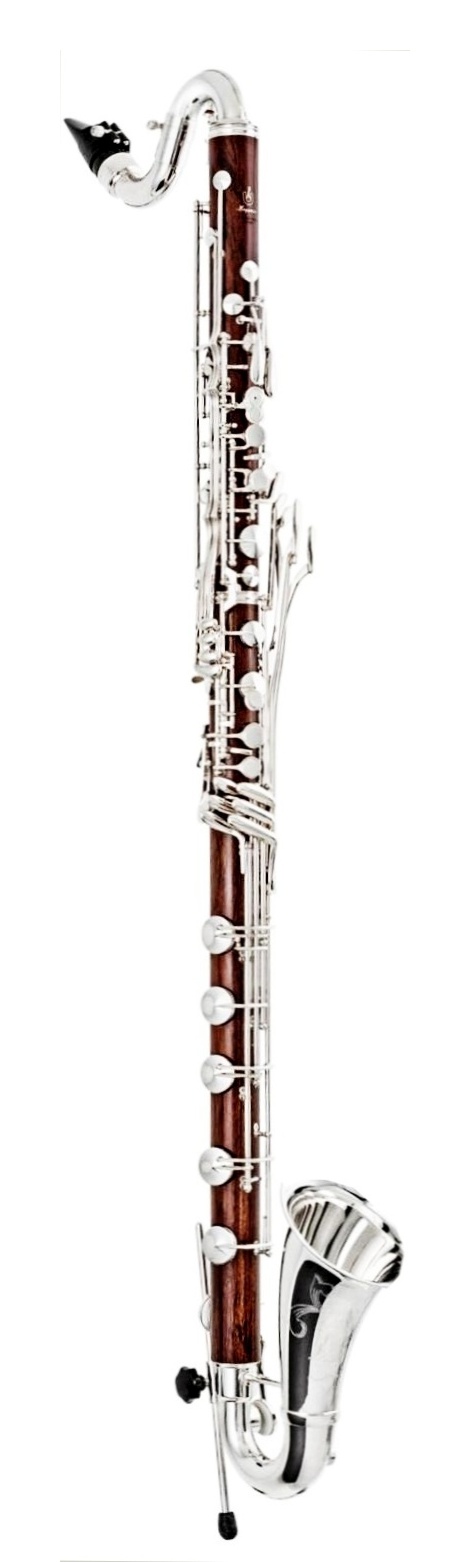
The alto clarinet is a woodwind instrument of the clarinet family. It is a transposing instrument pitched in the key of E♭, though instruments in F have been made. In size it lies between the soprano clarinet and the bass clarinet. It bears a greater resemblance to the bass clarinet in that it typically has a straight body (made of grenadilla or other wood, hard rubber, or plastic), but a curved neck and bell made of metal. All-metal alto clarinets also exist. In appearance it strongly resembles the basset horn, but usually differs in three respects: it is pitched a whole step lower, it lacks an extended lower range, and it has a wider bore than many basset horns.
Other single-reed instruments




Frequently asked questions
What does an alto clarinet sound like?
As one of the single-reed instruments, its sound comes from the way a single reed beats against a mouthpiece.
What type of instrument is the alto clarinet?
It is classified as single-reed instruments (Hornbostel–Sachs 422.211.2).
Sources & credits
- Wikidata Q656766 – CC0
- Wikipedia: Alto clarinet – CC BY-SA 4.0
- Image by Yamaha Corporation – CC BY-SA 4.0