How the agidigbo makes its sound
In the Hornbostel–Sachs system, which classifies instruments by how they produce sound, the agidigbo belongs to the plucked idiophones (lamellophones): flexible tongues or lamellae are plucked – the mbira, kalimba, music box and jaw harp.
More broadly it is one of the idiophones, where the solid body of the instrument itself vibrates, without strings or a stretched membrane.
Its timbre – the colour that lets you tell it apart from other instruments playing the same note – comes from the mix of overtones its body and resonator emphasise.
From Wikipedia
The agidigbo or ‘’’molo’’’ is a large traditional plucked lamellophone thumb piano used by the Yoruba people of Nigeria to play apala music.
It is a box, big enough to sit on a musician’s lap, with 4 to 5 strips of metal set up side by side on top like keys on a piano keyboard. The tongues are designed to vibrate. The musician uses their fingers to pluck them, the left hand plucking one or two rhythmic tongues, the right hand plucking the three melodic tongues. "The best players use as many fingers as possible." Players also tap the side of the instrument with a thick ring or the top with their thumbs or knuckles.
Other plucked idiophones

Jew's harp
Plucked idiophones (lamellophones)

Mbira
Plucked idiophones (lamellophones)
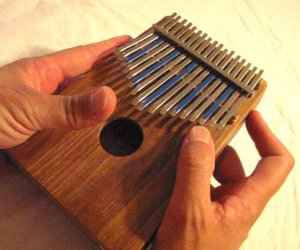
Lamellophone
Plucked idiophones (lamellophones)

Đàn môi
Plucked idiophones (lamellophones)

Kouxian
Plucked idiophones (lamellophones)

Ōtsuzumi
Plucked idiophones (lamellophones)
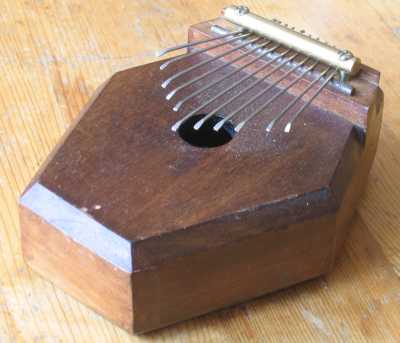
Kalimba
Plucked idiophones (lamellophones)

Ikembe
Plucked idiophones (lamellophones)
Frequently asked questions
What does an agidigbo sound like?
As one of the plucked idiophones, its sound comes from the way flexible tongues or lamellae are plucked.
What type of instrument is the agidigbo?
It is classified as plucked idiophones (lamellophones) (Hornbostel–Sachs 122.1).