About Ars antiqua
Ars antiqua is a music genre in the 1170s. It is usually classed as a form of medieval music.
From Wikipedia
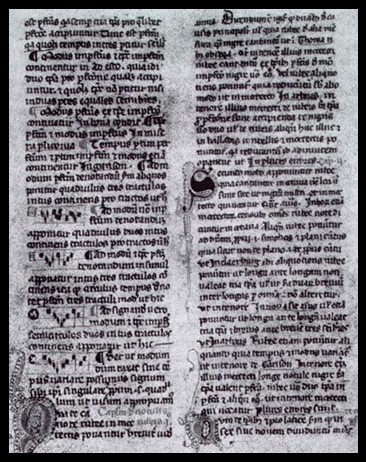
Ars antiqua, also called ars veterum or ars vetus, is a term used by modern scholars to refer to the Medieval music of Europe during the High Middle Ages, between approximately 1170 and 1310. This covers the period of the Notre-Dame school of polyphony (the use of multiple, simultaneous, independent melodic lines), and the subsequent years which saw the early development of the motet, a highly varied choral musical composition. Usually the term ars antiqua is restricted to sacred (church) or polyphonic music, excluding the secular (non-religious) monophonic songs of the troubadours, and trouvères. Although colloquially the term ars antiqua is used more loosely to mean all European music of the 13th century, and from slightly before.
Genre family tree
Parent genres (↑) and subgenres (↓) of Ars antiqua.
Related genres
Ars nova
1310s
Descant
musical term with several meanings
Conductus
medieval song with serious, usually sacred, text in Latin verse
Music of the Trecento
period of Italian music in the 1300s
Leise
genre of medieval church songs
Contenance angloise
musical polyphonic style
Discant
medieval music style
Frequently asked questions
What is Ars antiqua?
Ars antiqua is a music genre in the 1170s. It is usually classed as a form of medieval music.
Where and when did Ars antiqua originate?
Ars antiqua originated in the 1170s.