Listen to the blue rock thrush
Tip: press play to see the sound's live frequency spectrum in blue over the waveform.
About the blue rock thrush
The blue rock thrush is a bird in the family Muscicapidae (order Passeriformes). Its conservation status on the IUCN Red List is “least concern”. Adults weigh around 6 g.
What does the blue rock thrush sound like?
Birds produce sound with the syrinx, a vocal organ deep in the chest that can make two independent sounds at once. Songs tend to be long and patterned and are used to hold territory and attract a mate; calls are short signals for contact, alarm and flight.
The recordings here are labelled as roquero solitario. Listen for differences in rhythm, pitch and repetition – the spectrum display makes it easy to see whether a sound is a pure whistle (a thin line), a harsh call (a broad band) or a trill (rapid repeated marks).
From Wikipedia
The blue rock thrush (Monticola solitarius) is a species of chat. This thrush-like Old World flycatcher was formerly placed in the family Turdidae. It breeds in southern Europe, northwest Africa, and from Central Asia to northern China and Malaysia. The blue rock thrush is the official national bird of Malta.
Related birds in the genus Monticola

More from the family Muscicapidae

European robin
Erithacus rubecula

Common nightingale
Luscinia megarhynchos

Bluethroat
Luscinia svecica

Common redstart
Phoenicurus phoenicurus

Northern wheatear
Oenanthe oenanthe

Black redstart
Phoenicurus ochruros

Spotted flycatcher
Muscicapa striata

Red-breasted flycatcher
Ficedula parva

Thrush nightingale
Luscinia luscinia
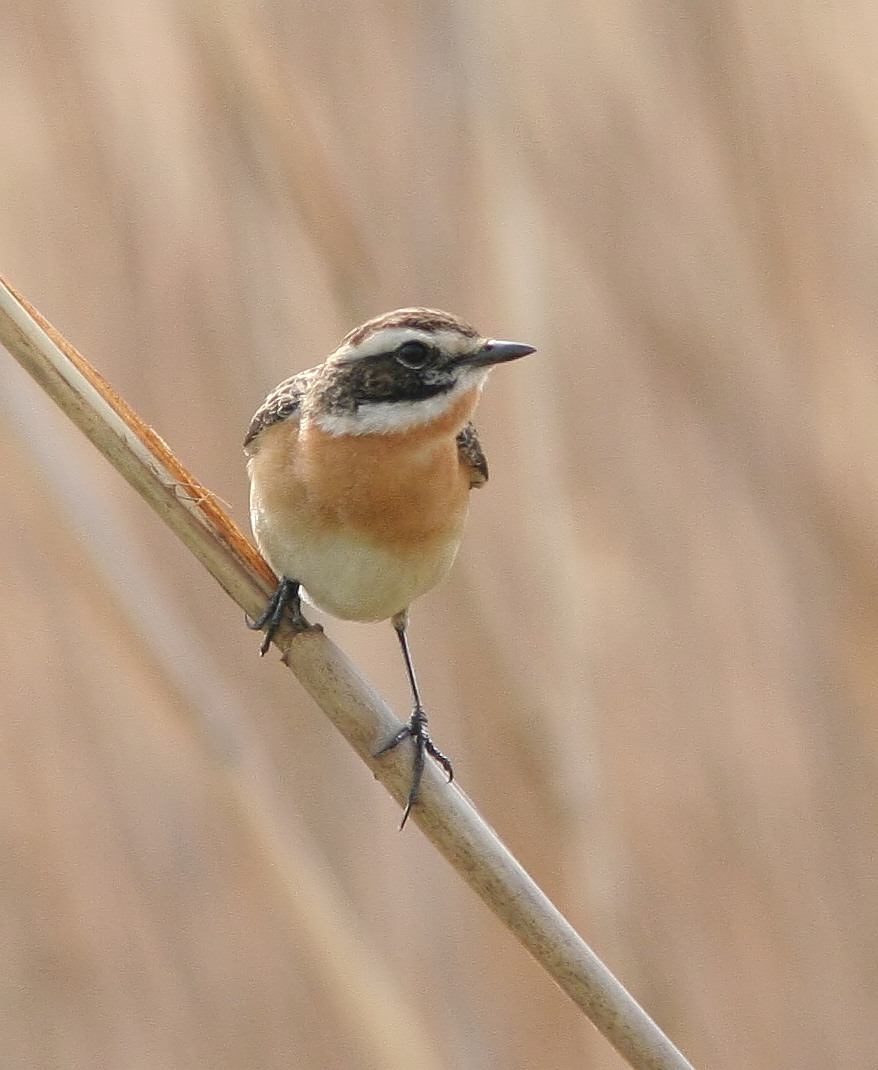
Whinchat
Saxicola rubetra

European pied flycatcher
Ficedula hypoleuca
Frequently asked questions
What does a blue rock thrush sound like?
You can hear 1 recording of the blue rock thrush on this page, including its roquero solitario. Birds produce sound with the syrinx, a vocal organ deep in the chest that can make two independent sounds at once.
Is the blue rock thrush endangered?
The IUCN Red List classifies the blue rock thrush as “least concern”.
What family does the blue rock thrush belong to?
The blue rock thrush (Monticola solitarius) belongs to the family Muscicapidae in the order Passeriformes.
Sources & credits
- Roquero solitario by Sternanita3 – CC BY-SA 4.0 · Wikimedia Commons
- Wikidata Q152144 – CC0
- Wikipedia: Blue rock thrush – CC BY-SA 4.0
- Photo by Juan lacruz – CC BY-SA 4.0